If your child’s school mentions “Abacus and Vedic Maths”, it’s fair to wonder what that actually means — and whether it’s a real part of the curriculum or an extra you pay for on the side. This guide explains the two ideas in plain language, then covers what to ask any school that offers them.
Two different things, often taught together
Abacus is a counting tool: a frame with rows of beads that represent ones, tens, hundreds and so on. In school programmes, children first learn to calculate by moving the beads with their fingers. With practice, they learn to picture the abacus in their mind and work out answers without the physical tool. That mental picture is why abacus training is often described as “mental arithmetic”.
Vedic Maths is a collection of calculation shortcuts, popularised in the twentieth century, for things like multiplying large numbers, squaring, and checking answers quickly. Where the abacus builds a feel for how numbers work, Vedic techniques give children faster routes to an answer once they understand the numbers underneath.
Used together, the two cover different ground: the abacus builds number sense and visualisation, and the Vedic techniques add speed on specific kinds of calculation.
What children actually practise
Programmes vary from school to school, but the day-to-day work typically looks like this:
- Representing numbers on the abacus and doing addition and subtraction with the beads
- Moving from the physical abacus to visualising it, so calculations happen mentally
- Practising speed and accuracy on timed sets of sums
- Learning specific shortcut methods for multiplication, division and squares, and applying them
The point is not to replace understanding with tricks. A child who can see why the answer is what it is has a much easier time in algebra and geometry later.
Why it’s better inside the timetable than as an add-on
Many families first meet abacus classes as an after-school activity. There’s nothing wrong with that, but a programme built into the school day has a practical advantage: it happens regularly, with the same teachers who know your child in other subjects, and it doesn’t compete with homework, tuition and everything else that fills the evening.
At St. Lawrence, Abacus and Vedic Maths training is part of the Primary Wing timetable and carries on through the senior years. The school’s aim is the one parents usually care about most: sharper concentration and number sense that carry into every subject, not just maths class.
What the results look like
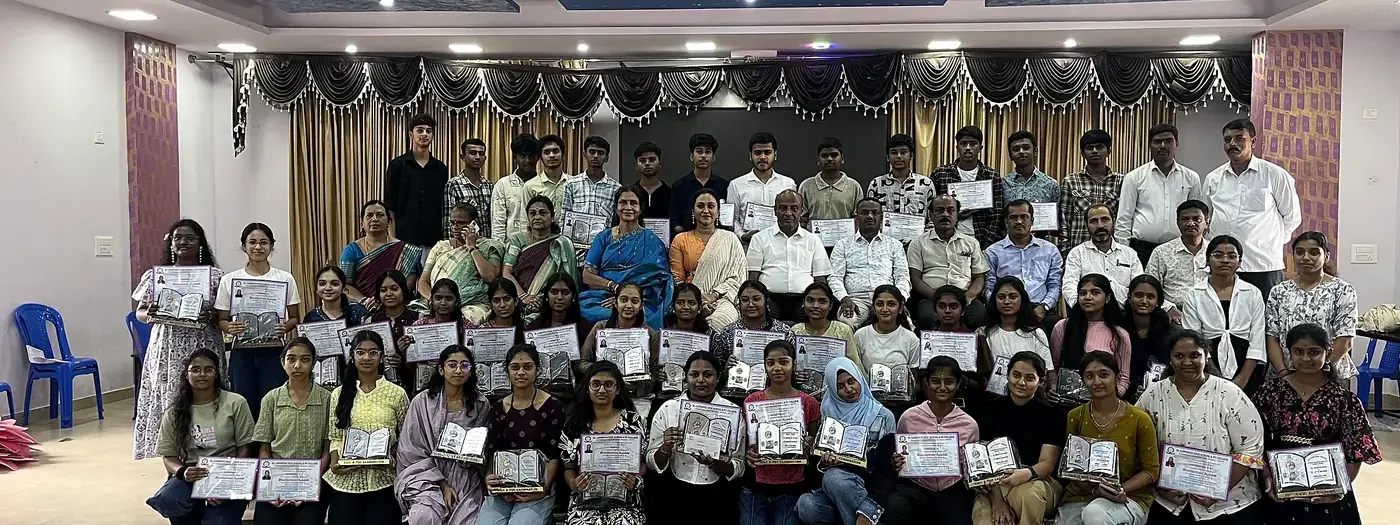
Training is only worth it if it produces something you can see. St. Lawrence students have collected 44 trophies at the intra-school and state-level Abacus and Vedic Maths competition held at the Bhima Jaga Jeevan Ram Auditorium in Sumanahalli. Competitions aren’t the goal of the programme, but they are an honest check that the training works under pressure.
Questions to ask any school that offers it
Whether you’re comparing schools in West Bangalore or anywhere else, these questions separate a real programme from a token one:
- Is it part of the timetable, or an optional extra? Timetabled programmes get consistent practice.
- Which classes does it cover, and does it continue as children grow? A programme that stops after a year or two builds less than one that carries on.
- How is progress shown to parents? Look for levels, assessments or competition results, not just a general promise that it “helps”.
- Who teaches it? Ideally teachers who also see your child in regular classes, so the skills connect to the rest of their learning.
- Can I see the results? Trophies, ranks and competition outcomes are easy for a school to show if the programme works.
Where to go next
If you’d like to see how Abacus and Vedic Maths fits into a day at St. Lawrence, the full programme page has the details. And if you’re weighing up schools for the coming year, the admission process is a simple four-step journey — you’re welcome to visit the Kamakshipalya campus and see a working day for yourself.