
Starting LKG is a big step, for the child and for the parents. For many children it is the first time they spend most of the morning away from family, follow a timetable and share a classroom with other children. The good news is that a few months of gentle preparation at home makes the first weeks far easier. Here is what helps most.
1. Build a school-day routine early
Children settle faster when the school day feels familiar. In the months before LKG, move gradually towards a school-day rhythm: a regular bedtime, waking at the same time each morning, breakfast at a set time, and a short “activity time” at a table. By the time school starts, the routine is already theirs.
2. Practise small acts of independence
Teachers do help, but children feel more confident when they can manage the basics themselves. Practise:
- Opening and closing their lunch box and water bottle
- Eating without help and wiping their hands
- Asking to use the toilet, and washing their hands afterwards
- Putting on their shoes, even if the straps take a while
- Recognising their own bag and belongings
3. Make books part of every day
The single most useful habit you can build is reading together. Ten minutes a day with a picture book, talking about what they see and pointing to the words, builds vocabulary, attention and a positive feeling about books. Sing rhymes, play “I spy” with sounds (“something that starts with b”), and let your child turn the pages.
You do not need to teach reading before LKG. A good kindergarten will introduce letters and sounds step by step. What helps most is a child who already enjoys books.
4. Play with colours, shapes and counting
Everyday play does more than worksheets at this age. Sort toys by colour, count steps on the stairs, name shapes on a walk, and let your child draw, colour and cut paper with child-safe scissors. These build the fine motor skills and early concepts that kindergarten will develop further.
5. Talk about school positively
Children pick up on how adults feel. Talk about school as somewhere exciting: new friends, stories, songs and activities. Visit the school together beforehand if you can, so the building and the classroom are not a surprise on the first day. Avoid using school as a warning (“your teacher will be strict”).
6. Plan the first few weeks
Some tears in the first days are normal, and usually short-lived. A few things help:
- Keep goodbyes short and cheerful. A long, anxious goodbye makes it harder.
- Be on time for pick-up. Knowing you will come back builds trust quickly.
- Ask specific questions afterwards. “What song did you sing?” gets a better answer than “How was school?”
- Talk to the teacher if your child is still unsettled after a couple of weeks.
What a good kindergarten does in return
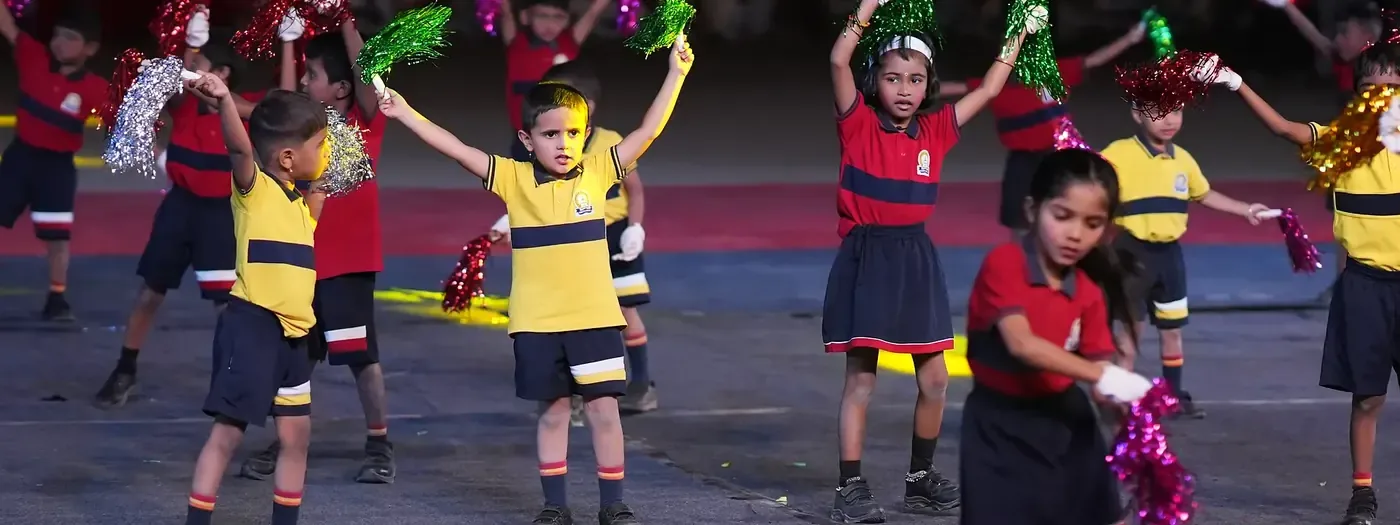
Preparation at home works best when the school meets children halfway. When you visit, look for a kindergarten where reading starts with sounds and pictures rather than rote copying, where there is plenty of activity and play, and where children have a chance to build confidence in front of others.
LKG at St. Lawrence
In our Nursery Wing, children learn sentence formation with pictures and sight words, using phonetic sounds, oral exercises and rhymes. Colour concept days, like our recent Colour’s Day 2026, turn learning into something children wear, make and see around them. Children are introduced to the kindergarten library early, to build a lifelong love of books, and weekly activity room sessions on Wednesdays and Saturdays use short educational films for better visual understanding.
For LKG, a child should be 4+ years as on 1 June of the admission year; our guide to the right starting age covers the details. You can read more about the early years on our Nursery Wing page, and you are welcome to visit the Kamakshipalya campus with your child before you decide.